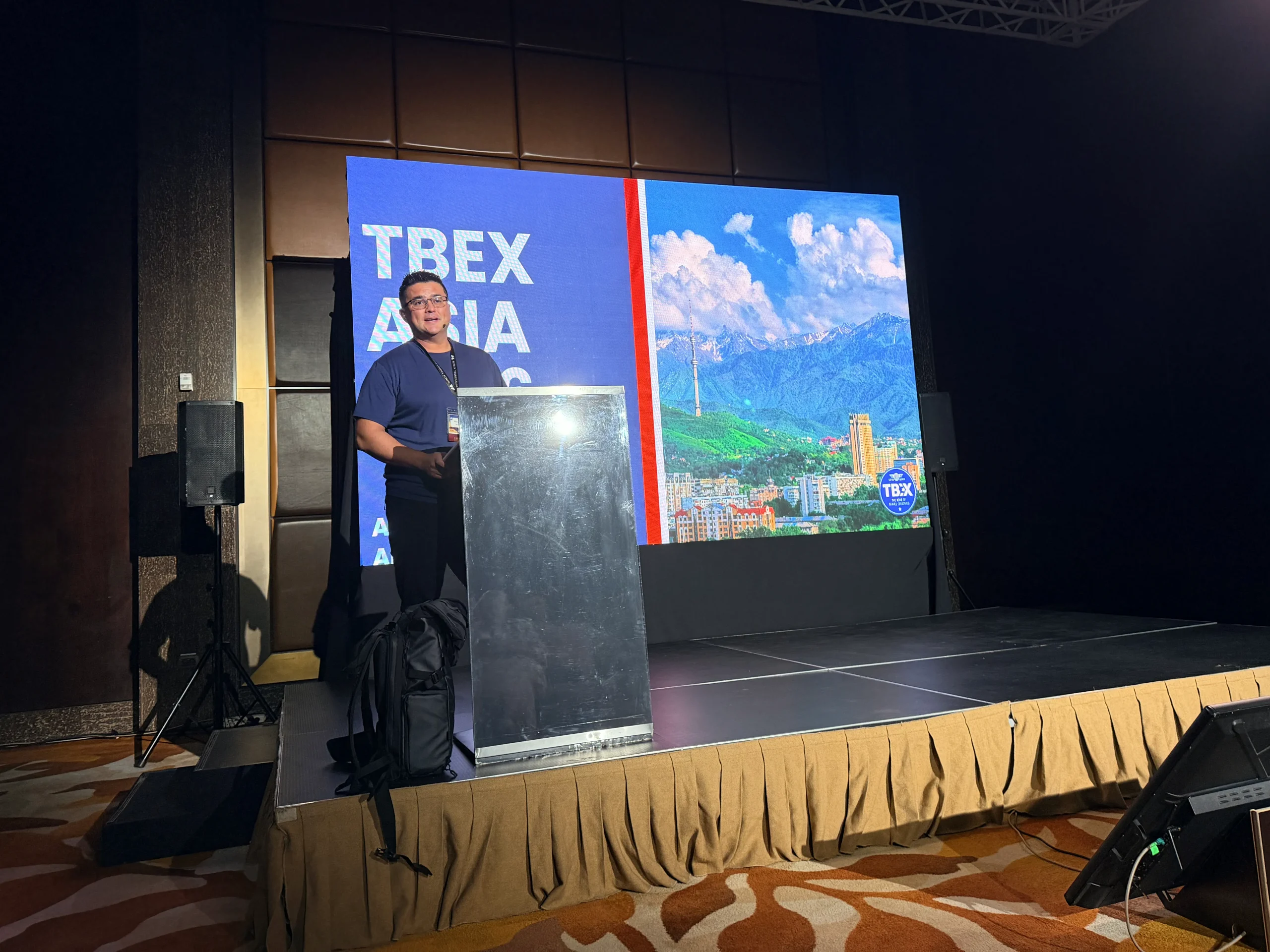
When I prepared my TBEX Almaty presentation, How to Turn a Travel Blog into a Real Tourism Business, I kept returning to one simple idea.
Travel bloggers have built something much more valuable than a collection of articles.
We have spent years learning about destinations, answering questions, taking photographs, creating videos, building websites, understanding search engines, working with tourism companies, and earning the trust of travelers.
Yet many of us still look at our blogs only as places to publish content.
We think about page views, advertising revenue, sponsored posts, and affiliate links. Those things can produce income, but they can also prevent us from seeing the larger opportunity.
A travel blog can become the front door of a real business.
Now AI gives independent bloggers an opportunity to do even more. It can help us organize information, improve our content, understand our readers, and build systems that once required a much larger team.
AI should not replace the traveler, the writer, or the local expert. Used correctly, it can become one of our best partners.
Travel Blogging Taught Us More Than We Realize
Travel blogging was often presented as a simple dream. Travel the world, take beautiful photographs, write stories, and earn money from anywhere.
Then we started doing it and discovered that a travel blogger has many different jobs.
We became writers, photographers, editors, researchers, web designers, search specialists, social media managers, salespeople, customer service agents, accountants, and business owners.
Most of us learned these skills by solving problems as they appeared. There was no clear instruction manual. We searched online, experimented, made mistakes, and tried again.
This experience created something extremely valuable. It gave us a combination of practical skills, destination knowledge, and direct access to travelers.
The problem is that many bloggers never learn how to connect those assets to a business model.
The Class Many Travel Bloggers Missed
In my presentation, I called this missing class Business 101.
Bloggers learn how to choose keywords, create content, edit photographs, grow social media accounts, and place affiliate links. But we do not always learn to ask the basic questions that every business must answer.
What problem does my reader have?
What does this person need before making a decision?
Can I provide the solution directly?
Can I work with a trusted local company to provide it?
What happens after the reader leaves my article?
People spend money when a product or service solves a problem or fulfills a need. This principle is simple, but it can completely change the way we create travel content.
Instead of starting with a keyword, we can begin with a traveler and a real problem.
A family may need to know which tour is appropriate for a six year old child. A visitor may need reliable transportation from the airport. Someone renting a car may not understand the insurance options. A traveler with limited mobility may need honest information about stairs, trails, bathrooms, and access.
These are not only content ideas. They are opportunities to provide useful solutions through travel content.
Your Blog Can Be the Front Door
For many years, bloggers were encouraged to send readers to another platform through an affiliate link.
The reader clicked, left the blog, and completed the purchase somewhere else. If the sale happened, the blogger received a commission.
There is nothing wrong with affiliate marketing. It can be useful for the reader and profitable for the publisher. But it is only one option.
When you understand a destination deeply, have relationships with local companies, and know what travelers need, you may be able to provide a better experience directly.
That is what we learned with Mytanfeet.
The blog attracts travelers who are looking for trustworthy information about Costa Rica. But the relationship does not have to end when they finish reading an article. We can also help them compare options, reserve tours, rent a car, arrange transportation, and solve problems during their vacation.
The content remains useful and free. It also becomes the entrance to a service.
This changes the value of the blog. A page view is no longer only an advertising impression or a possible affiliate click. It can be the beginning of a relationship with a traveler.
Then AI Entered the Room
AI is creating understandable fear among bloggers.
Search engines can answer some questions without sending a visitor to the original website. Companies can generate large amounts of average content quickly. Travelers can ask an AI system to create an itinerary in seconds.
I understand why bloggers feel threatened. I have felt it too.
Human Verified Travel actually began after I watched close friends ask AI where we should go during a trip to Mexico. It surprised me that people were willing to trust a machine with decisions that could shape an important vacation.
But that moment also made me curious.
Instead of asking only how AI might hurt travel blogs, I started asking another question.
How can AI help us become better bloggers and stronger business owners?
That question is much more useful because AI is not going away. We can ignore it, compete against it, or learn how to use it responsibly.
AI Can Give a Small Blogger the Capacity of a Team
A solo blogger or small team always has more ideas than time.
There are articles to update, photographs to organize, emails to answer, analytics to review, links to check, videos to edit, and new destinations to cover.
AI can reduce the time spent on many of these tasks.
After a day of exploring a destination, I may have voice recordings, photographs, quick notes, brochures, prices, names, and observations. The valuable information is there, but turning it into an organized article requires hours of additional work.
AI can help sort the material, group related ideas, prepare an outline, identify missing details, and suggest questions that still need to be verified.
It can compare an old article with new notes and show which sections may need updating. It can identify opportunities for internal links. It can turn one detailed guide into ideas for a newsletter, a short video, a social post, or a frequently asked questions section.
It can also help analyze the business side of a blog.
We can use AI to group customer questions, recognize repeated problems, examine which content leads to inquiries, prepare clearer service descriptions, and discover points where readers may be abandoning the booking process.
For people who write in a language that is not their first language, AI can also help improve grammar and clarity without removing their personality. English is not my first language, so this is especially useful to me.
None of these tasks require AI to pretend that it visited the destination. They require it to help a human process information more efficiently.
What AI Does Well
- Organizing information
AI can turn messy notes, recordings, documents, and ideas into a structure that is easier to review. - Finding patterns
It can examine repeated customer questions, common complaints, search behavior, and booking data to reveal opportunities. - Creating a useful starting point
AI can prepare outlines, summaries, title ideas, comparison tables, and early drafts that a human can improve. - Checking completeness
It can point out information that may be missing, such as accessibility, transportation, opening hours, prices, age limits, or what travelers should bring. - Repurposing good information
It can adapt verified information for different formats while keeping the central facts consistent. - Handling repetitive work
AI can help with routine tasks so the blogger has more time for travel, interviews, testing, photography, and relationships.
This is where AI can become a real partner. It increases our capacity without pretending to replace our experience.
What AI Cannot Do for Us
AI can describe a street, but it cannot walk down that street for us.
It cannot notice that a neighborhood feels completely different at night. It cannot see that the entrance to an attraction is difficult to find. It cannot feel how exhausting a trail becomes in the afternoon heat.
It cannot build a genuine relationship with the guide who has spent thirty years protecting a forest. It cannot judge whether a tourism company treats its employees well. It cannot take responsibility when a recommendation is wrong.
AI also makes mistakes. It can mix information from different places, repeat outdated details, invent facts, or present uncertain information with complete confidence.
This is why human verification matters.
The blogger must decide what is relevant, confirm the important facts, add personal observations, and accept responsibility for the final recommendation.
Our value is not simply that we can arrange words on a page. Our value comes from experience, judgment, trust, access, and accountability.
The Human Verified Travel Method
Human Verified Travel is an experiment in using AI openly and responsibly.
The objective is not to publish as many articles as possible. The objective is to see whether a traveler and AI can work together to create genuinely useful travel information.
Step 1: The Human Collects the Reality
I visit the place, take photographs, record observations, speak with people, collect practical details, and note anything that might affect a real traveler.
Step 2: AI Organizes the Material
AI helps transcribe recordings, sort notes, identify themes, prepare an article structure, and find questions that the collected information does not answer.
Step 3: The Human Challenges the Draft
I review the result and ask whether it reflects what I actually experienced. I remove generic statements, correct misunderstandings, and add the details that only someone who was there would know.
Step 4: Important Information Is Verified
Prices, schedules, rules, locations, and other practical details are checked against reliable sources or confirmed with the business involved.
Step 5: AI Helps Improve the Presentation
AI can help make the article easier to read, improve the organization, suggest internal links, prepare image descriptions, and adapt verified information for other formats.
Step 6: The Human Makes the Final Decision
Nothing should be published simply because AI produced it. The person whose name appears on the article must approve it and remain responsible for it.
AI Should Make Our Content More Human
This may sound contradictory, but the best use of AI could make travel content more human.
If AI handles part of the repetitive work, bloggers can spend more time doing the things that create original value.
We can spend more time exploring beyond the most famous attractions. We can interview local people. We can test tours, compare transportation options, check accessibility, and return to places when information changes.
We can also spend more time helping readers personally.
The goal should not be to use AI to produce one hundred generic articles. The goal should be to use AI so we have enough time and information to create ten articles that are genuinely useful.
Efficiency is valuable only when it improves the final experience for the reader.
The Bloggers Who Adapt Can Build Stronger Businesses
Basic informational content is becoming easier to produce and easier to summarize. That means bloggers need to offer more than facts that can be found everywhere.
We need to provide context, confidence, proof, personal experience, and a clear path toward solving the traveler’s problem.
A person planning a vacation does not only need a list of attractions. That person needs to decide which attraction is worth the limited time available, whether it is appropriate for the family, how to get there, what to reserve, what to avoid, and what to do if something goes wrong.
Bloggers who understand those needs can create valuable services around their content.
AI can help us study the questions, organize the knowledge, improve the website, and operate the systems behind the service. The blogger contributes destination experience, local relationships, judgment, and trust.
Together, those capabilities are more powerful than either one alone.
This May Be the Best Time to Be a Travel Blogger
It is easy to look at changes in search and AI and conclude that the best years of travel blogging are over.
I do not believe that.
I believe the role of the travel blogger is changing.
The opportunity is no longer limited to writing an article and hoping that advertising or affiliate income follows. We can use our blogs to build direct relationships, create services, support local companies, develop products, and solve real problems for travelers.
AI lowers many of the barriers that once made those ideas difficult for a small team.
It can help with research organization, communication, analysis, content planning, customer service systems, and technical tasks. That gives bloggers more time to concentrate on the work that requires a human.
AI Is Not the Author of Our Experience
AI does not need to replace travel bloggers.
It can become the most capable partner we have ever had.
It can help with the heavy lifting, organize the information, question our assumptions, and give a small creator the capacity to attempt much larger projects.
But the human still has to leave the hotel room, walk the street, meet the people, test the experience, make the judgment, and verify the recommendation.
That is the balance I want to explore with Human Verified Travel.
AI can help create the work.
A human must make it worth trusting.
Leave a Reply