Hello! My name is Yeison (it sounds like Jason) and sandwhiches are my favorite food.
I am a travel content creator who collaborates with different travel websites and tourism projects. A big part of what I do is connect travel content with real businesses, helping turn useful information into better customer experiences, stronger relationships with travelers and sustainable tourism businesses.
Over the years I have worked on travel content, photography, destination research, tourism services, partnerships, booking experiences and the business side of travel websites. I love the point where good information, real experience and good customer service all come together.
Why Human Verified Travel Exists
The idea for Human Verified Travel came to me during a trip to Mexico with some of my closest friends.
I watched them ask AI where we should go, what we should see and how we should plan the trip. For me, it was honestly a little shocking to see how quickly people were willing to trust an AI system with something as personal as a vacation.
So eventually I decided to play along. We followed the AI itinerary.
The result was not great.
Some recommendations looked perfectly reasonable on a screen, but they did not work very well in real life. That experience stayed with me because it showed the difference between knowing information about a place and actually experiencing that place.
AI Is an Amazing Tool But It Is Not a Traveler
I believe AI is a great tool. It can help us research faster, organize ideas, translate information, improve workflows and become much more efficient in our jobs and daily lives.
But there are some things about travel that AI will never experience.
AI cannot taste the food. It cannot have a spontaneous conversation with a local person. It cannot feel exhausted after walking all day, amazed when a view appears around a corner, disappointed when a famous attraction feels overrated, or annoyed when something that looked easy online turns out to be frustrating in real life.
Those feelings matter because they change travel advice.
A place can have thousands of five star descriptions online and still not be right for you. A restaurant can look perfect in a database but feel completely different when you sit down. A route that looks simple on a map can feel exhausting in the heat. A beautiful attraction might be wonderful at 7:00 AM and miserable three hours later.
That is the part of travel that data alone cannot fully explain.
Where Does AI Get Its Travel Advice?
AI systems learn from enormous amounts of information created by other people. They can collect, compare and summarize what has been published across the web, but they do not personally know whether the original writer was correct, whether the information was outdated, whether the person actually visited, or what motivation was behind the content.
In very simple terms, AI takes human created information and produces a new answer from it. Some creators describe that as AI “stealing” content. Whatever word you prefer, the bigger question for travel is what happens when fewer people are financially able to keep creating the original firsthand information.
The Travel Information Ecosystem Has a Problem
Thousands of travel creators make a living by visiting places, taking photographs, talking with locals, testing tours, staying in hotels, making mistakes and then sharing what they learned so somebody else can make a better travel decision.
That work costs money and time.
Traditionally, people found those creators through search engines, visited their websites and supported the business model through advertising, affiliate commissions, bookings or other services.
Now more travelers are asking AI for the answer without ever visiting the websites that produced much of the underlying information. That is already putting pressure on the business model that funds independent travel content.
And that creates a strange long term problem for AI too.
If fewer travel creators can afford to travel, research and publish new firsthand experiences, where will tomorrow’s travel information come from?
AI can reorganize existing knowledge extremely well. But somebody still has to go somewhere first.
Travel information is not something that can be published once and remain true forever.
If there is one thing you can be certain about when traveling, it is that everything is always changing. Hotels change owners. Tour companies change routes and guides. Restaurants improve, decline or disappear. Opening hours, prices, roads, policies and entire destinations can change surprisingly quickly.
That is why humans need to keep returning to the same places. Updating travel content is not only about correcting a price or replacing a broken link. Somebody has to check whether the experience has changed and whether a recommendation is still deserved.
There is also a much larger tourism ecosystem behind every recommendation. Hotels, tour operators, guides, restaurant owners, drivers and countless other small and large businesses depend on travelers being able to discover them. New businesses deserve an opportunity to be found, while established businesses should not receive permanent attention simply because old information once described them as the best.
What happens if travel creators stop going to these places and publishing new information?
AI may continue recommending the same familiar attractions and businesses because they already have the most content written about them. Those recommendations create more visitors, more reviews and more online information, making the same places even easier for AI to recommend again. Meanwhile, newer, smaller or better businesses could remain almost invisible.
That cycle could also weaken accountability. If a hotel, tour or restaurant continues appearing in AI recommendations because the system is repeating years of old praise, what happens when the quality changes? A recommendation should not become a lifetime award, and business owners should never feel that maintaining quality no longer matters.
Google Reviews and Tripadvisor are useful, but a review is usually one person’s view of one moment. A specialized travel creator can compare experiences across destinations, ask questions, examine logistics, notice patterns and explain who an experience is actually right for.
I have also personally seen businesses offer discounts or free products in exchange for a five-star review. That does not make every review unreliable, but it shows why a star rating alone cannot replace context, transparency and independent human judgment.
AI needs fresh and honest travel information to remain useful. For that information to exist, somebody still has to visit, pay attention, ask difficult questions, update the record and sometimes say that a place is no longer worth recommending.
What We Are Trying to Do Here
Human Verified Travel is not anti AI. Quite the opposite.
This project is also an experiment in how travel creators can use AI intelligently without pretending that software had the experience. AI can help us research, organize, edit and work faster. The human still has to travel, observe, question, taste, photograph, compare and decide what is actually worth telling you.
Every destination has facts. What makes travel advice useful is the judgment that comes after experiencing those facts in real life.
That is what I want Human Verified Travel to protect: the value of firsthand experience while still embracing the tools that can help us work better.
People talking to people will never be out of business.
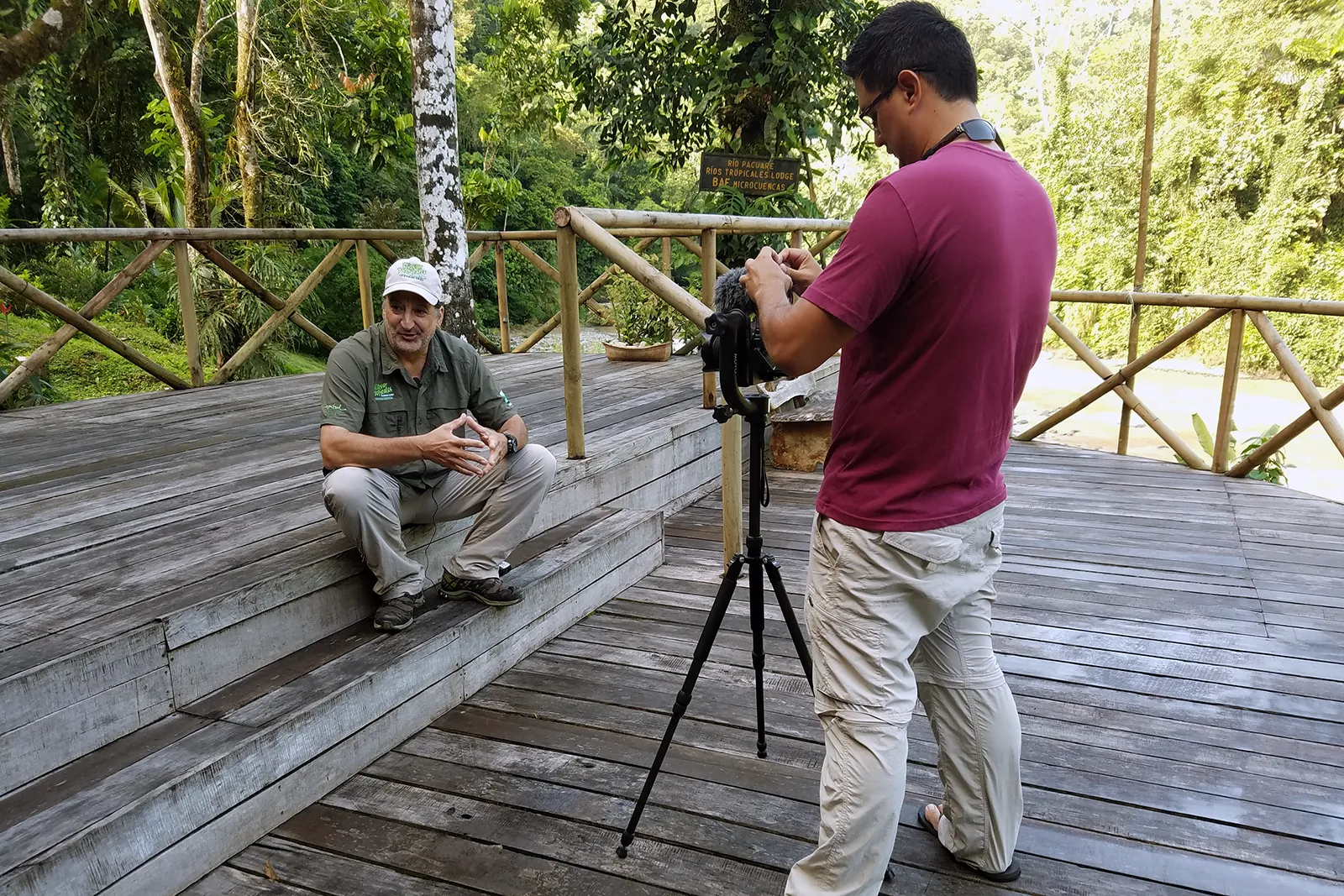
Talking with Rafael Gallo, a pioneer in sustainable tourism and conservation in Costa Rica, who sadly passed away in 2021